
Amplitude Research Reveals a Generational AI Trust Gap is Costing Australian Businesses
New research suggests senior leaders’ distrust of AI is driving inefficient implementation and widening Australia’s AI skills gap.
New research by Amplitude, Inc. (Nasdaq: AMPL), the leading AI analytics platform, has revealed a generational divide in how much business leaders and their employees trust artificial intelligence (AI), a trend that may be limiting the benefits of the technology to Australian businesses and hampering the development of much needed AI skills across the country.
Just 4% of workers aged 55–64 say they trust AI recommendations over their own judgement, compared to 31% of 18–24 year olds, according to Amplitude’s study. At the same time, 39% of those aged 18–24 use AI tools daily in their job, compared to just 20% of those aged 55–64. These figures highlight a stark gap in trust between older professionals, who are more likely to be in leadership roles, and younger professionals who are most likely to be in more junior positions.
Yet despite the propensity for younger professionals to use AI tools more regularly at work, only 13% of respondents aged 18–24 years and 9% of those aged 25–34 indicate that AI is core to their organisation’s work. Comparatively, close to half (48%) of respondents say their organisation is getting better at AI but still has a way to go, while 24% say their organisation rarely uses AI at all.
This lack of AI direction at an organisational level is reflected in the development of AI skills among professionals, especially among younger generations. There are more professionals aged 18–24 who primarily upskill in AI outside of work hours (40%) than those who upskill during work hours (32%). Only 5% of respondents across all age groups say they upskill in AI through mentorship or peer learning.
These figures suggest that, although AI tools are being actively used for work among younger professionals, there appears to be a lack of strategic AI guidance from the senior ranks. Without leadership-led AI frameworks, businesses may run the risk of experiencing a mismatch between the latent potential of AI tools and the outcomes of their implementation – whether official or unofficial.
“The age-based discrepancy in trust around AI means senior decision-makers may inadvertently downplay its potential, limiting the value organisations derive from these tools,” said Mark Drasutis, Head of Value, Asia Pacific and Japan, Amplitude. “Without strategic implementation, AI is more likely to fall short of its goals. At a national level, this generational trust gap risks creating a structural adoption ceiling that restricts skills development and exacerbates Australia’s existing AI skills shortage.”
The research also revealed:
- AI use is widespread but not universal: 27% of respondents use AI tools daily and 33% a few times a week, while 24% say they use AI tools only occasionally, and 15% report not using AI at work at all.
- AI use is concentrated in content and information tasks: The most common use cases are writing or editing documents, emails and reports (44%), summarising information (38%), and supporting data analysis or reporting (31%).
- A high avoidance of AI for judgement-heavy tasks: 28% avoid using AI for decision-making or strategic planning, 25% for data analysis or reporting, 22% for coding, debugging or technical work and 20% for scheduling or meeting preparation.
- Top reasons for avoiding AI in higher-stakes tasks: Prefer own judgement/creativity (34%), lack of trust in accuracy (32%), outputs feel generic (30%), and confidentiality leakage risk (29%).
- Self-assessed AI skill levels are low: One-third (33%) describe themselves as beginners or not skilled, another 34% say they are somewhat skilled – able to use AI tools but not expertly – and only 6% consider themselves highly skilled and ahead of the curve.
- Overall trust in AI outputs is limited: On a scale of 1–5, the mean trust score for AI outputs at work is 2.59, with 50% trusting their own judgement more than AI, compared with 15% who trust AI more.
- Perceived productivity gains are modest: While 12% say AI has transformed how they work or somewhat helps (54%), 23% believe it adds more work than it saves, and 11% say it actively slows them down.
- Organisational AI maturity remains low: Only 8% say their organisation is AI-driven, while 65% spend either no time or less than an hour per week learning or experimenting with AI tools.
- Career impact expectations are mixed: Over half (58%) believe AI will meaningfully change demand for their role in the next 5 years, while 32% do not believe it will change the demand for their job; 16% say AI users already have a career advantage.
- Personal AI use affects its use in the workplace: Nearly half (48%) strongly agree or agree the personal use of AI has influenced how they use it at work, while just 23% disagree or strongly disagree it’s influenced their use at work.
- AI is creating uneven team dynamics and quiet tension at work: While 45% say AI hasn’t changed team dynamics, 18% report colleagues competing to prove they are more AI-savvy and 11% say non-users resent those who rely heavily on AI. Perceived tension is concentrated among younger workers, with only 23–25% of 18–34 year olds reporting no AI-related tension, compared with 64–66% of workers aged 55+.
For more information about the research, contact amplitude-syd@archetype.co.
Note: all percentages have been rounded to the nearest whole number.
About Amplitude
Amplitude is the leading AI analytics platform, helping over 4,700 customers—including Atlassian, Burger King, NBCUniversal, and Square—build better products and digital experiences. With powerful AI Agents embedded across our platform, teams can analyze, test, and optimize user experiences faster than ever. Ranked #1 across multiple categories in G2’s Winter 2026 Report, Amplitude is the best-in-class solution for product, data, and marketing teams. Learn more at amplitude.com.

- 「全球突破」深入推进,美的集团宜长线收集
- 北航NEP纳米电束技术成功产业化 Ultra-NEP超透仪全球首发引领精准透肤新纪元
- Gradiant推出alkaLi-采用世界上最高效的电池级锂生产工艺EC2
- Dave & Buster's International 加强其在亚太地区的地位
- CAT1022ZD4I-45T3: Enhancing System Integrity with High-Performance EEPROM Memory | ChipsX
- 专业深耕再出发:靓范医生专家团赴深参加微创注射技术培训会
- 抖音3榜第1,刷新历史!盗龄医生创始人“万百万创业导师”新号首播成功
- TestMu AI Unlocks Real-Device Testing for Android 17 Beta Ahead of Official Launch
- 2024中国生育健康科普大会・乳腺疾病高端论坛在北京成功举办
- 元朗食品:关爱新业态新就业群体,传递健康与平安
- 提前吃抗病毒药能预防流感吗?春运将至,了解流感三大防线
- LyondellBasell enters into an agreement and exclusive negotiations with AEQUITA for the sale of four
- 华东师大与华为联合发布《大模型背景下高等教育数智化转型研究报告》
- 连连国际携手微信支付 解锁泰国大皇宫购票难问题
- 从街头车贴“宣战”到球场挥汗,北京现代南京车主硬核应援“南哥”!
- Reckitt借助NIQ AI洞察加速创新,研究周期最快缩短65%
- 豪塞雷小鱼小蛙自助火锅店盛大开业 解锁深圳火锅界“鲜”体验
- 健帆生物的“敢”与“感”
- WillScot Introduces Innovative Power Solution – Solar Power by WillScot
- Wireless Mobility Automotive成为100%德资控股公司,强化其作为可信赖西方供应商的地位
- WeFi Technology Group:从前端革新渠道金融模式
- WEEX 宣布成为 LALIGA 西甲联赛香港及台湾官方区域合作伙伴
- 星光熠熠!定格乡村振兴赋能计划走进山东兰陵荣耀之夜璀璨瞬间
- IQM Quantum Computers公布到2030年实现容错量子计算的发展路线图
- 随着企业对供应链安全的需求加速增长,Binarly宣布领导层更迭
- 王力杯“乡村振兴、返乡创业”大学生直播系列活动4月25日启幕
- 林芃荣膺首批床垫类5A认证,以品质标杆引领行业高质量发展
- 晨光公益基金会携手多方伙伴,举办孤独症日共融趣味运动会暨公益市集
- 李国杰谈未来就业:做人工智能不擅长的事儿
- 亚马逊全球开店重磅发布《2025年度全球电商消费趋势及选品洞察报告》
推荐
-
 男子“机闹”后航班取消,同机旅客准备集体起诉
1月4日,一男子大闹飞机致航班取消的新闻登上
资讯
男子“机闹”后航班取消,同机旅客准备集体起诉
1月4日,一男子大闹飞机致航班取消的新闻登上
资讯
-
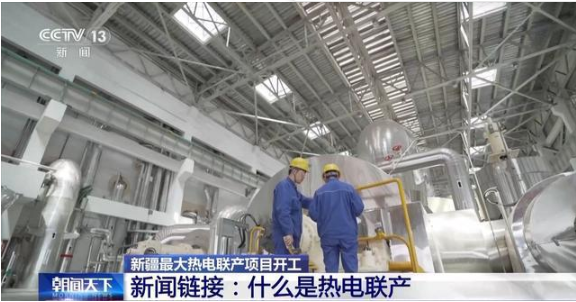 新增供热能力3200万平方米 新疆最大热电联产项目开工
昨天(26日),新疆最大的热电联产项目—&md
资讯
新增供热能力3200万平方米 新疆最大热电联产项目开工
昨天(26日),新疆最大的热电联产项目—&md
资讯
-
 周星驰新片《少林女足》在台湾省举办海选,吸引了不少素人和足球爱好者前来参加
周星驰新片《少林女足》在台湾省举办海选,吸
资讯
周星驰新片《少林女足》在台湾省举办海选,吸引了不少素人和足球爱好者前来参加
周星驰新片《少林女足》在台湾省举办海选,吸
资讯
-
 看新东方创始人俞敏洪如何回应董宇辉新号分流的?
(来源:中国证券报)
东方甄选净利润大幅下滑
资讯
看新东方创始人俞敏洪如何回应董宇辉新号分流的?
(来源:中国证券报)
东方甄选净利润大幅下滑
资讯
-
 国足13次出战亚洲杯首次小组赛0进球
北京时间1月23日消息,2023亚洲杯小组
资讯
国足13次出战亚洲杯首次小组赛0进球
北京时间1月23日消息,2023亚洲杯小组
资讯
-
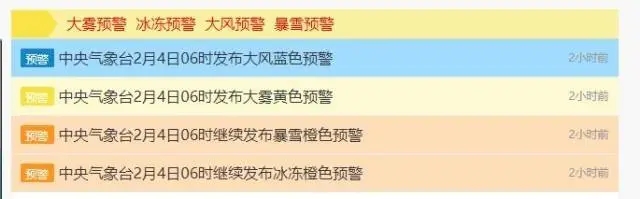 中央气象台连发四则气象灾害预警
暴雪橙色预警+冰冻橙色预警+大雾黄色预警+
资讯
中央气象台连发四则气象灾害预警
暴雪橙色预警+冰冻橙色预警+大雾黄色预警+
资讯
-
 一个“江浙沪人家的孩子已经不卷学习了”的新闻引发议论纷纷
星标★
来源:桌子的生活观(ID:zzdshg)
没
资讯
一个“江浙沪人家的孩子已经不卷学习了”的新闻引发议论纷纷
星标★
来源:桌子的生活观(ID:zzdshg)
没
资讯
-
 大家一起关注新疆乌什7.1级地震救援见闻
看到热气腾腾的抓饭马上就要出锅、村里大家
资讯
大家一起关注新疆乌什7.1级地震救援见闻
看到热气腾腾的抓饭马上就要出锅、村里大家
资讯
-
 透过数据看城乡居民医保“含金量” 缴费标准是否合理?
记者从国家医保局了解到,近期,全国大部分地区
资讯
透过数据看城乡居民医保“含金量” 缴费标准是否合理?
记者从国家医保局了解到,近期,全国大部分地区
资讯
-
 海南大学生返校机票贵 有什么好的解决办法吗?
近日,有网友在“人民网领导留言板&rdqu
资讯
海南大学生返校机票贵 有什么好的解决办法吗?
近日,有网友在“人民网领导留言板&rdqu
资讯